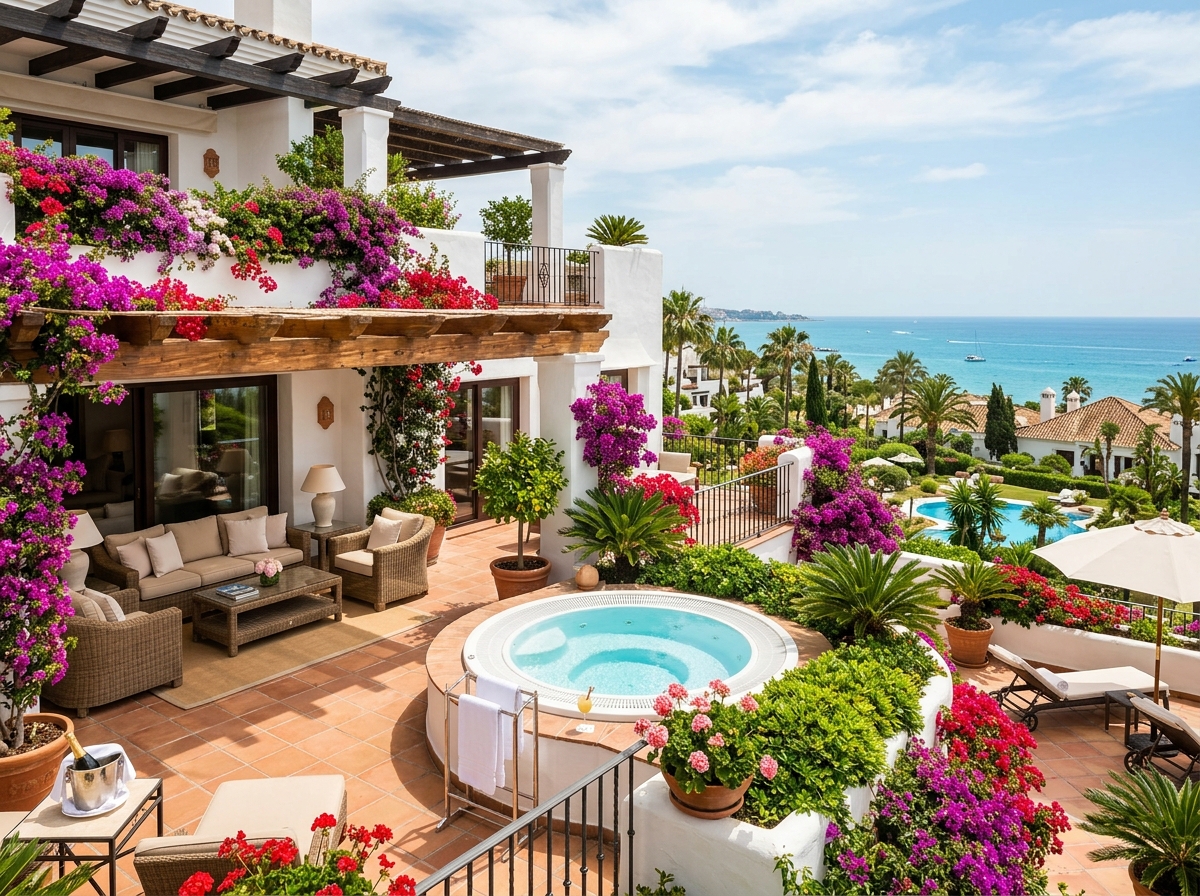
Lifestyle Reality & Climate Intelligence · Marbella
One of the most persistent misconceptions among prospective international property buyers is that Marbella empties out and shuts down after October. The reality is the exact inverse: November to April is universally regarded by permanent residents and seasoned homeowners as Marbella’s finest, most sophisticated season. As a permanent mainland European city of over 150,000 multinational residents, Marbella delivers mild daytime temperatures of 18°C to 22°C, 320 days of annual sunshine, year-round Michelin-starred dining, peak championship golf season, active private schools, and direct 2-hour access to Sierra Nevada ski slopes.
Marbella Winter Climate & Lifestyle Metrics (2026)
1. The Seasonal Myth vs. Residential Reality: Marbella vs. Mediterranean Islands
To understand why Marbella remains vibrant throughout the winter, one must examine the fundamental structural difference between isolated resort islands and connected mainland European hubs.
Destinations such as Ibiza, Mykonos, Santorini, Sardinia, and even parts of Mallorca operate almost exclusively on short-term summer tourism. When the charter flights cease in late October, seasonal hospitality workers return to the mainland, up to 70% of restaurants and beach clubs board up their windows, local ferry connections drop sharply, and towns enter a state of economic hibernation until May.
Marbella is fundamentally different. It is a mature, affluent residential municipality with an official census exceeding 150,000 registered inhabitants (and an estimated real permanent population exceeding 220,000 across Marbella, Benahavís, and Estepona). It is home to more than 15 international private schools operating on traditional three-term academic calendars, state-of-the-art private hospital complexes (Hospital Quirónsalud Marbella, HC Marbella International Hospital, Hospiten Estepona), law firms, financial institutions, and corporate headquarters.
Furthermore, Málaga-Costa del Sol Airport (AGP)—located just 35 minutes away via the AP-7 toll highway—is Spain's fourth-busiest international airport. Unlike regional island airports that close their international terminals in winter, Málaga maintains daily scheduled non-stop flights to over 120 European capitals and major cities throughout the winter months, ensuring effortless weekend commuting for business executives and international homeowners.
2. The Microclimate Physics: How La Concha Shields the Coast
The extraordinary winter climate of Marbella is not a marketing exaggeration; it is a direct consequence of physical geography. Rising dramatically behind the Golden Mile and Nueva Andalucía sits the iconic 1,215-meter limestone peak of La Concha mountain, the southern anchor of the Sierra Blanca mountain range.
This natural geological barrier serves two critical climatic functions:
Blocking Northern Cold Fronts
Cold air masses traveling south across the Iberian plateau (the *Meseta Central*) are physically blocked and diverted away by the mountain ridge. As a result, when temperatures in Madrid drop to 4°C and Granada drops to 2°C, coastal Marbella frequently registers pleasant noon temperatures of 20°C to 22°C.
The Mediterranean Thermal Reservoir
The Alboran Sea absorbs solar radiation throughout the hot summer and slowly releases thermal energy back into the coastal atmosphere during winter. This marine thermal flywheel prevents deep frost and maintains average winter evening temperatures above 11°C to 13°C.
| Month | Avg Daytime High | Avg Night Low | Daily Sunshine | Rainy Days (Avg) | Living Character |
|---|---|---|---|---|---|
| November | 21°C (70°F) | 12°C (54°F) | 7 Hours | 5 Days | Golden autumn warmth; outdoor terrace dining; golf kickoff. |
| December | 18°C (64°F) | 10°C (50°F) | 6 Hours | 5 Days | Festive holiday lights; Christmas dinners in Puente Romano; beach walks. |
| January | 17°C – 19°C (63°F–66°F) | 9°C (48°F) | 6 Hours | 4 Days | Crisp, crystal-clear blue skies; peak Sierra Nevada ski conditions. |
| February | 19°C (66°F) | 10°C (50°F) | 7 Hours | 4 Days | Almond blossoms bloom; prime outdoor tennis and mountain cycling. |
| March | 22°C (72°F) | 12°C (54°F) | 8 Hours | 4 Days | Spring warmth arrives; beach chiringuitos open extended sun terraces. |
| April | 24°C (75°F) | 14°C (57°F) | 9 Hours | 3 Days | Easter (*Semana Santa*) celebrations; summer beach clubs begin soft launches. |
*Historical 10-year meteorological data recorded by the State Meteorological Agency of Spain (AEMET) at the Marbella Coastal Observatory.
3. The Winter Gastronomy & Social Scene: Why Residents Prefer Winter
Ask any long-term resident of the Golden Mile or Nueva Andalucía when they most enjoy dining out, and the answer is almost unanimous: between November and March.
During the peak summer months of July and August, Marbella experiences an influx of over 300,000 seasonal vacationers. Securing a prime table at top establishments requires booking weeks in advance, valet parking at Puente Romano experiences congestion, and the atmosphere leans heavily toward high-energy nightlife.
In winter, the culinary landscape shifts into a relaxed, effortlessly sophisticated rhythm. The world-class dining institutions do not close; instead, they cater to their discerning, loyal permanent clientele:
The Puente Romano & Marbella Club Courtyards
The heated, subtropical botanical plaza of Puente Romano remains the social epicenter of Marbella 365 nights a year. Flagship international venues operate fully:
- • Cipriani Marbella: Classic Venetian dining and Bellinis on the candlelit terrace.
- • Nobu Restaurant: World-renowned Japanese-Peruvian fine dining.
- • Coya Marbella: Vibrant Latin American gastronomy and private members' lounge.
- • BiBo & Leña by Dani García: Three-Michelin-star chef's celebrated brasserie and steakhouse concepts.
- • The Grill at Marbella Club: Historic candlelit silver service beside outdoor open-hearth fires.
Winter Beachfront Chiringuitos & Fine Dining
Beachside dining transforms into a sun-drenched afternoon ritual where long lunches stretch from 14:00 to 18:00 beneath clear blue skies:
- • Chiringuito Puente Romano: Heated wooden decks directly on the sand with open sea views.
- • Trocadero Arena (Los Monteros): Colonial African-inspired beachfront dining with roaring indoor fireplaces.
- • Nota Blu New Brasserie (Nagüeles): Sophisticated architectural dining by the Casanis Group.
- • Lobito de Mar (Golden Mile): Dani García’s upscale seafood temple with fresh Mediterranean catches.
- • Mamzel at Finca Besaya: Dinner-show venue transitioning to intimate winter supper club formats.
What Actually Closes in Winter?
The only venues that close from November through April are daytime pool-party clubs (e.g., Nikki Beach Elviria, Ocean Club Puerto Banús, and Playa Padre's open-air summer party series) and seasonal tourist souvenir shops in the marina. Far from diminishing the city’s appeal, this seasonal filter strips away commercial tourist noise, leaving behind the refined, cosmopolitan core of luxury European living.
4. The Winter Sports & Active Lifestyle Paradise
While Northern Europe endures freezing rain, short daylight hours, and indoor confinement, Marbella in winter is an open-air athletic amphitheater. In fact, for sports enthusiasts, winter is the undisputed high season:
The European Golf High Season (October to May)
Peak SeasonSummer in Southern Spain is often too hot for midday golf. Winter, by contrast, is when the 70+ championship courses of the "Costa del Golf" (including Real Club Valderrama, Real Club de Golf Las Brisas, Los Naranjos, Aloha Golf, Finca Cortesin, and La Zagaleta) operate at peak tournament condition. Mild 20°C weather, immaculate bentgrass greens, and low coastal winds provide the finest golfing conditions on the European continent.
World-Class Tennis & Padel Scene
Year-Round CommunityMarbella is the European capital of padel and clay-court tennis. The legendary Puente Romano Tennis Club (founded by Björn Borg in 1979), Real Club de Pádel Marbella, Manolo Santana Racquets Club, and Los Naranjos Padel Club host vibrant amateur leagues, international pro exhibitions, and private coaching all winter long.
Mountain Trekking, Senda Litoral & Road Cycling
Outdoor LivingWinter is the optimal time for ascending the iconic summit trail of La Concha from Refugio de Juanar in Ojén, exploring the newly minted Sierra de las Nieves National Park, cycling the mountain passes toward Ronda, or walking the continuous 27-kilometer paved seaside promenade (*Senda Litoral*) from Marbella to San Pedro without summer foot traffic.
5. The Legendary 2-Hour Connection: Skiing in Sierra Nevada
Perhaps the single most unique lifestyle privilege of residing in Marbella during the winter is the proximity to Sierra Nevada Ski Station in Granada.
Located just 2 hours by car via the AP-7 and A-92 highways, Sierra Nevada is Europe’s southernmost ski resort and one of its highest (with peaks reaching 3,398 meters at Veleta). It boasts over 110 kilometers of groomed ski runs across 131 pistes, high-speed modern gondolas, and a ski season extending reliably from late November through late April.
The "Dual Season" Day: A Resident Routine
6. Winter Property Living: Heating & Architectural Specifications
For international purchasers acquiring a villa or penthouse in Marbella, understanding winter property specifications is essential. While days are mild and sun-drenched, winter nighttime temperatures drop to 9°C–12°C. Older Andalusian villas built before 2010 were frequently constructed without adequate thermal insulation, leading to chilly indoor winter evenings.
Essential Modern Heating Systems
- • Water-Based Underfloor Heating (*Suelo Radiante*): Powered by high-efficiency Daikin or Mitsubishi aerothermal heat pumps (*aerotermia*), providing continuous, gentle ambient warmth across large-format marble or porcelain floor slabs.
- • Zone-Controlled VRV Climate: Independent multi-split climate systems allowing individual bedroom climate adjustments without running central heating unnecessarily.
- • Architectural Double-Sided Fireplaces: Bioethanol, high-efficiency gas, or enclosed modern wood-burning cassette fireplaces creating ambient focal points in open-plan living rooms.
Glazing, Insulation & Pool Heating
- • Thermal Break Glazing: Minimalist floor-to-ceiling sliding glass systems (Cortizo Cor Vision, Schüco, Technal) with low-emissivity argon gas cavities to retain winter indoor heat and eliminate morning condensation.
- • Heated Infinity Swimming Pools: Salt-chlorinated swimming pools equipped with inverter heat pumps and automated submerged thermal slatted covers, maintaining 28°C water for comfortable year-round swimming.
- • Automated Glass Curtains (*Cortinas de Cristal*): Enclosing covered terraces (*porches*) with retractable frameless glass panels, transforming outdoor summer lounges into protected winter sunrooms.
Lifestyle & Resident Advisory